XRF Research provides lead in water testing for child care facilities, schools, commercial properties, residential buildings, and targeted drinking water investigations in San Diego and Southern California. We help clients choose the right sampling approach, collect defensible samples, and interpret laboratory results in a practical regulatory context.
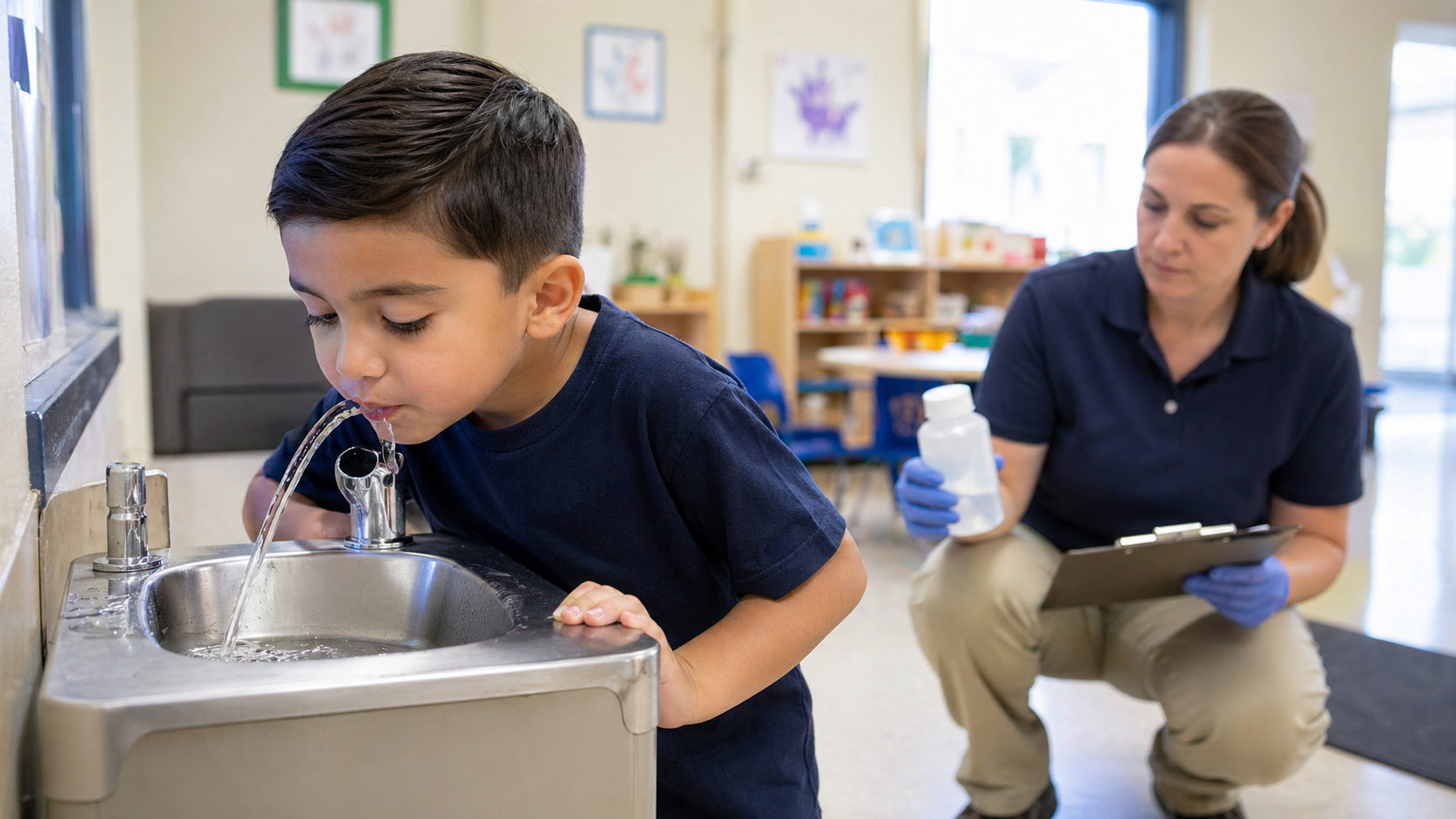
Lead in drinking water is different from lead-based paint testing. The concern is usually plumbing-related: lead service lines, older fixtures, solder, brass components, stagnant water, or fixture-specific contamination. A useful investigation depends on the sampling objective, the building use, and whether the project is regulatory, due diligence, health-related, or simply a practical check of drinking water quality.
CDSS / AB 2370 Child Care Center Testing
California child care center lead testing is a more structured process than ordinary water sampling. The California Department of Social Services (CDSS), working with the State Water Resources Control Board Division of Drinking Water, requires lead testing for licensed child care centers in California. For many child care centers in buildings constructed before January 1, 2010, AB 2370 established testing requirements beginning in 2020 and recurring every five years after the initial test.
For these projects, the work may include fixture inventory, sample location planning, outlet identification, chain-of-custody documentation, first-draw sampling, follow-up flush sampling when needed, coordination with an accredited laboratory, and documentation suitable for child care licensing or facility records.
- Licensed child care centers, preschools, and day care facilities
- Required testing, retesting, or follow-up sampling after an elevated result
- Fixture-specific investigations involving kitchens, classrooms, bathrooms, drinking fountains, and food preparation areas
- Documentation for directors, property owners, contractors, and regulatory files
Conventional Lead in Water Testing
Not every project is a CDSS child care center project. Homeowners, property managers, employers, and building owners may want a simpler lead in water assessment to check one or more taps. Depending on the question, sampling may include first-draw samples, flushed samples, comparison between fixtures, or targeted testing after plumbing repairs, fixture replacement, building reopening, or tenant concerns.
Conventional testing can be useful when a client wants to understand whether lead is present at a drinking water outlet, whether flushing reduces concentrations, or whether an issue appears isolated to one fixture rather than the broader building water supply.
Laboratory Analysis and Reporting
Water samples are submitted to an accredited environmental laboratory. Lead and other metals in drinking water are commonly analyzed by EPA Method 200.8, an inductively coupled plasma mass spectrometry (ICP-MS) method used for trace metals in water. The resulting report can be used to compare results with applicable action levels, project goals, or facility-specific decision criteria.
The federal Lead and Copper Rule applies to public water systems and is an important framework for understanding lead and copper in drinking water. Building-specific sampling is often narrower than public water system compliance monitoring, but the same concepts matter: tap sampling, corrosion-related lead release, action levels, lead service lines, and public-health interpretation.
Information That Helps Us Quote the Work
- Facility type: child care center, school, commercial building, residence, or other property
- Whether the project is CDSS / AB 2370 compliance, retesting, due diligence, health-related, or general screening
- Number and type of outlets to be sampled
- Whether first-draw, flush, or both sample types are needed
- Required turnaround time and reporting deadline
- Property address, site contact, and access constraints
For a quote, call (858) 442-3230 or email [email protected].
Helpful external references: CDSS Water Testing Information, California Water Boards Childcare Center Lead Sampling Program, EPA Lead and Copper Rule, and EPA Method 200.8.